
TL;DR - AI Summary
Creating a thriving garden in a limited space like a balcony requires careful planning. It’s about maximizing every inch with clever layouts and the right container choices. These balcony garden layout ideas will help you transform your small outdoor area into a green oasis, no matter the size.
Understanding Your Balcony Space
Before you start buying plants and pots, take a good look at your balcony. Consider these factors:
- Weight Limit: Balconies have weight restrictions. Check your building’s regulations before loading it up with heavy containers. Lightweight materials are your friend.
- Sun Exposure: Is your balcony sunny, shady, or somewhere in between? This will dictate which plants will thrive. South-facing balconies get the most sun, while north-facing ones are shadier.
- Wind: Balconies can be windy, especially on higher floors. Choose sturdy pots and consider windbreaks.
- Drainage: Ensure your pots have drainage holes and use saucers to catch excess water. Check your lease or HOA rules about water runoff.
Mapping the Sun
Spend a day observing how the sun moves across your balcony. Note which areas get direct sun, partial shade, and full shade. This information is crucial for plant placement. Plants needing six or more hours of sun, like many herbs and vegetables, need a sunny spot. Shade-tolerant plants, such as ferns and begonias, can handle less direct light.
Vertical Gardening: Maximizing Space
Vertical gardening is a game-changer for small balconies. It allows you to grow more plants in less space by utilizing walls and railings.
- Wall-Mounted Planters: Attach planters directly to the walls to create a green wall. Choose lightweight planters to avoid overloading the structure.
- Hanging Baskets: Hang baskets from the railing or ceiling. They’re perfect for trailing plants like strawberries, herbs, and flowers.
- Trellises: Use trellises to support climbing plants like beans, cucumbers, or flowering vines. Place them against a wall or railing for a vertical garden effect.
- Stackable Planters: These planters stack on top of each other, creating a tower of plants. They’re ideal for herbs, strawberries, and leafy greens.
- Pallet Gardens: Repurpose a wooden pallet into a vertical garden. Attach fabric pockets or small pots to the pallet and fill them with plants.
Choosing the Right Containers
The right containers are essential for a successful balcony garden. Consider these factors when selecting your pots:
- Material: Lightweight materials like plastic, fiberglass, and resin are best for balconies. Avoid heavy terracotta or ceramic pots, which can add significant weight.
- Size: Choose the right size container for the plant you’re growing. Herbs and small flowers can thrive in smaller pots, while vegetables and larger plants need bigger containers.
- Shape: Opt for containers that maximize space. Rectangular planters fit well against walls and railings, while square pots can be arranged efficiently.
- Drainage: Make sure all containers have drainage holes to prevent waterlogging.
Container Size Guidelines
Here are some general guidelines for container sizes:
- Herbs: 6-12 inch pots
- Leafy Greens: 6-12 inch pots
- Strawberries: 8-12 inch pots or hanging baskets
- Tomatoes: 12-18 inch pots
- Peppers: 12-18 inch pots
- Cucumbers: 12-18 inch pots
Balcony Garden Layout Ideas
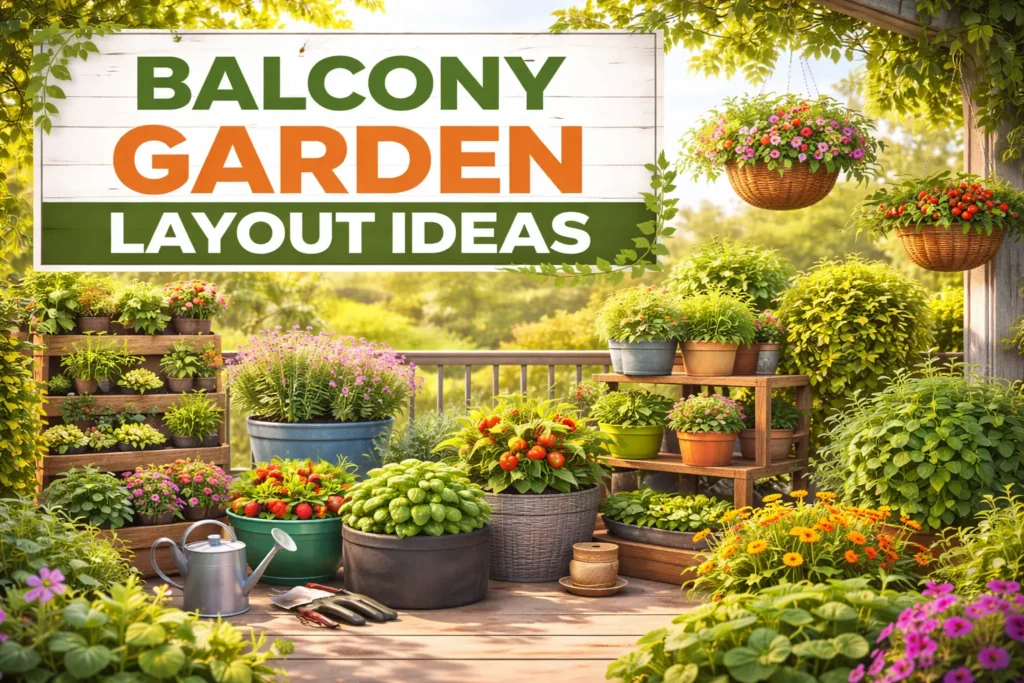
Here are a few balcony garden layout ideas to inspire you:
The Herb and Vegetable Haven
This layout focuses on growing edibles. Line the railing with window boxes filled with herbs like basil, oregano, and thyme. Place larger containers with tomatoes, peppers, and lettuce against the wall. Use a vertical trellis to support climbing vegetables like cucumbers or beans. You can find more inspiration in this guide to the best vegetables for container gardening. Don’t forget to check out the best herbs for container gardening for variety suggestions.
The Flower Power Oasis
If you love flowers, this layout is for you. Hang baskets of colorful petunias, calibrachoa, and verbena from the railing. Place pots of geraniums, begonias, and impatiens on the floor. Use a trellis to support flowering vines like clematis or morning glory. A small table and chairs will complete the relaxing oasis.
The Green Retreat
Create a calming green space with this layout. Use a variety of ferns, hostas, and other shade-tolerant plants. Add a small water feature for a soothing sound. Place comfortable seating and enjoy your peaceful retreat.
The Privacy Screen
If you need more privacy on your balcony, use tall planters filled with bamboo, ornamental grasses, or climbing vines. Arrange the planters to create a screen that blocks the view from neighboring balconies. This also acts as a windbreak.
Choosing the Right Plants
Selecting the right plants is crucial for a successful balcony garden. Consider your balcony’s sun exposure, wind conditions, and your personal preferences.
Sun-Loving Plants
If your balcony gets at least six hours of direct sun per day, consider these plants:
- Tomatoes
- Peppers
- Eggplant
- Zucchini
- Cucumbers
- Basil
- Rosemary
- Thyme
- Petunias
- Geraniums
- Marigolds
Shade-Tolerant Plants
If your balcony gets less than four hours of direct sun per day, choose these plants:
- Lettuce
- Spinach
- Kale
- Chard
- Mint
- Parsley
- Begonias
- Impatiens
- Fuchsias
- Hostas
- Ferns
Wind-Resistant Plants
If your balcony is windy, select plants that can withstand strong gusts:
- Lavender
- Rosemary
- Thyme
- Sedum
- Ornamental Grasses
Soil and Watering
Use a high-quality potting mix specifically designed for containers. Avoid using garden soil, which can be too heavy and poorly draining. Mix in perlite or vermiculite to improve drainage and aeration.
Water your plants regularly, especially during hot, dry weather. Check the soil moisture by sticking your finger into the soil. If it feels dry, it’s time to water. Water deeply until water drains out of the bottom of the pot. Self-watering containers can help maintain consistent moisture levels.
Fertilizing
Container plants need regular fertilization because nutrients leach out of the soil over time. Use a balanced fertilizer according to the package directions. You can use a slow-release fertilizer or a liquid fertilizer. Fertilize every 2-4 weeks during the growing season.
Pest and Disease Control
Keep an eye out for pests and diseases. Common balcony garden pests include aphids, spider mites, and whiteflies. Treat infestations promptly with insecticidal soap or neem oil.
Prevent diseases by providing good air circulation and avoiding overwatering. Remove any diseased leaves or plants to prevent the spread of infection.
Seasonal Considerations
Adjust your balcony garden layout and plant selection based on the season.
- Spring: Plant early-season vegetables like lettuce, spinach, and peas. Start herbs from seed indoors.
- Summer: Plant warm-season vegetables like tomatoes, peppers, and cucumbers. Water regularly and protect plants from scorching sun.
- Fall: Harvest your vegetables and plant cool-season crops like kale and chard. Prepare your balcony for winter by insulating pots and moving tender plants indoors.
- Winter: Protect your plants from frost and snow. Wrap pots with burlap or move them to a sheltered location.
Common Mistakes to Avoid
Here are some common mistakes to avoid when planning your balcony garden layout:
- Overcrowding: Don’t overcrowd your balcony with too many plants. Give each plant enough space to grow and thrive.
- Ignoring Weight Limits: Be mindful of your balcony’s weight limit. Use lightweight containers and avoid heavy materials.
- Neglecting Sun Exposure: Choose plants that are appropriate for your balcony’s sun exposure. Don’t plant sun-loving plants in a shady spot, or vice versa.
- Forgetting to Water: Container plants dry out quickly, so water them regularly, especially during hot weather.
- Failing to Fertilize: Container plants need regular fertilization to stay healthy.
Recent Trends
Some newer trends in balcony gardening include wheeled raised beds with storage, privacy planters with built-in trellises, and modular self-watering beds. Composite resin containers that mimic terracotta are also becoming popular due to their lightweight and durable nature.
With careful planning and the right layout, you can transform your small balcony into a beautiful and productive garden. Remember to consider your space, choose the right containers and plants, and provide proper care. Happy gardening, and be sure to read our best fruits to grow in containers for more ideas.
Frequently Asked Questions
How do I maximize space on my small balcony garden?
Use vertical gardening techniques like wall-mounted planters, hanging baskets, and trellises. Choose compact plant varieties and stackable containers to make the most of limited space.
What are the best plants for a sunny balcony?
Sun-loving plants like tomatoes, peppers, basil, rosemary, petunias, and geraniums thrive on balconies with at least six hours of direct sunlight per day.
What are the best plants for a shady balcony?
Shade-tolerant plants like lettuce, spinach, mint, parsley, begonias, impatiens, ferns, and hostas are ideal for balconies with less than four hours of direct sunlight.
How do I choose the right containers for my balcony garden?
Opt for lightweight materials like plastic, fiberglass, or resin. Select the appropriate size container for the plant you’re growing and ensure it has drainage holes.
How often should I water my balcony garden?
Water your plants regularly, especially during hot, dry weather. Check the soil moisture by sticking your finger into the soil. Water deeply when the top inch feels dry.