
TL;DR - AI Summary
Container gardening has become one of the most popular ways to grow herbs at home. You do not need a large backyard or acres of land to enjoy fresh herbs. With the right containers, soil, and care, you can grow flavorful, aromatic herbs right on your patio, balcony, porch, or kitchen windowsill. Growing herbs in containers gives you fresh ingredients within arm’s reach, and it adds beauty and fragrance to any space.
Whether you are a beginner gardener or have years of experience, this guide will show you the best herbs for container gardening and how to grow them successfully. This article covers the top herbs to grow in containers, tips on choosing the right pots and soil, watering and light requirements, common problems and solutions, harvesting advice, and ways to enjoy your herbs in cooking and daily life.
By the end of this article, you will know exactly how to choose, plant, care for, and harvest your own container herb garden with confidence.
Why Grow Herbs in Containers
Growing herbs in containers brings many benefits:
- Convenience: You can place containers wherever you have space and light. No need for a garden bed.
- Control: Containers give you control over soil quality, drainage, and pests.
- Aesthetics: Herb containers can beautify your home, patio, or balcony.
- Freshness: You have fresh herbs right when you need them for cooking or teas.
- Accessibility: Herbs near your kitchen encourage you to use them more often.
Herbs are generally easy to grow and forgiving, making them ideal for any gardener. Some herbs thrive in small containers, while others benefit from larger pots. In this guide we will walk through the best options and how to care for each.
Choosing Containers for Your Herb Garden
Before you plant herbs, choosing the right container is essential.
Material
Your container should be:
- Durable: Plastic, ceramic, terra cotta, wood, or metal are common choices.
- Drainage-Friendly: Avoid containers without drainage holes. Herbs do not like soggy roots.
Here is a brief look at container types:
Plastic Containers
Lightweight, inexpensive, and retain moisture well. Good for beginners.
Terracotta Pots
Porous and allow air exchange. They dry out faster, which is good for Mediterranean herbs.
Ceramic Pots
Decorative and sturdy. Make sure they have drainage holes.
Wooden Planters
Natural look and good insulation. Line them to prevent rot.
Size Matters
Different herbs grow at different rates and sizes. As a general rule:
- Small herbs like thyme and chives can grow in 6 to 8 inch pots.
- Medium herbs like basil and parsley prefer 10 to 12 inch pots.
- Larger herbs or multiple plants need 14 inches or larger.
Always choose a pot that provides room for roots to spread.
Drainage
Ensure each container has adequate drainage holes. If water cannot escape, roots may rot. Use pot feet or risers to allow water to drain freely.
Best Herbs for Container Gardening
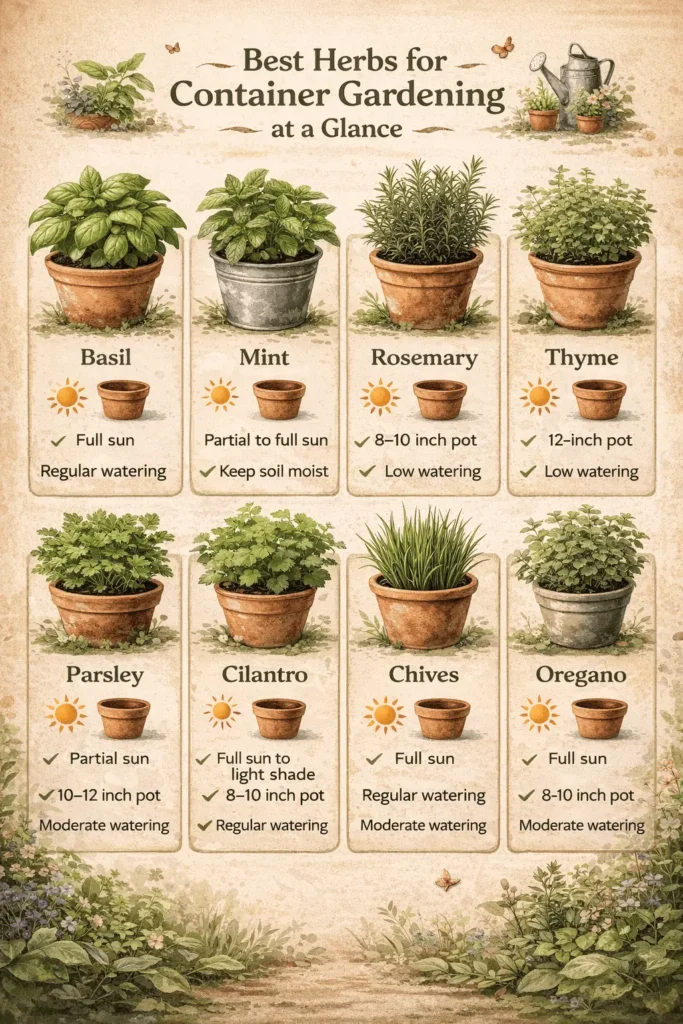
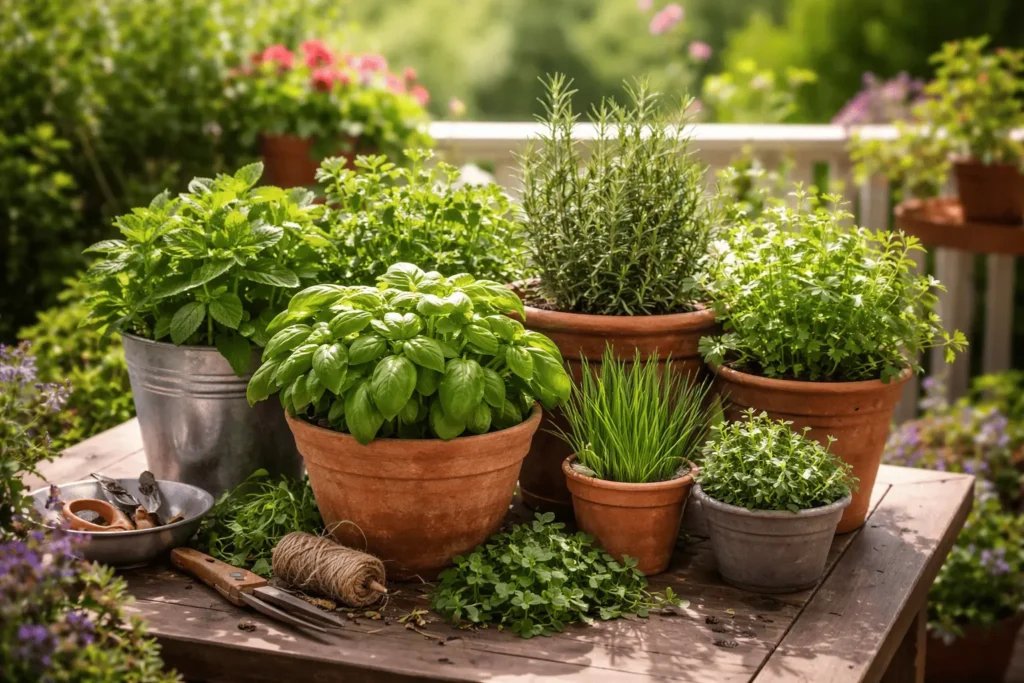
Now let’s explore the best herbs to grow in containers. We will include what they need, how to care for them, and tips to keep them thriving.
1. Basil
Basil is one of the most popular herbs for container gardens.
Why Grow Basil
Basil brings rich aroma and flavor to dishes like pesto, salads, and pasta. It grows quickly and produces large leaves.
Light Requirements
Full sun. Basil needs at least six hours of direct sunlight every day.
Soil
Use well-draining potting mix rich in organic matter.
Watering
Keep soil moist but not soggy. Water when the top inch feels dry.
Tips
Pinch off flowers as they appear to promote leaf growth. Harvest leaves regularly to encourage new growth.
2. Mint
Mint is a hardy, fast-growing herb that does well in containers.
Why Grow Mint
Mint adds zest to drinks, desserts, and cooking. It spreads quickly, which is why containers are ideal.
Light Requirements
Partial sun to full sun. Mint tolerates less intense light better than some herbs.
Soil
Moist, well-drained soil.
Watering
Mint likes consistent moisture. Do not let soil dry out completely.
Tips
Plant mint in its own container. It will take over if planted with other herbs.
3. Rosemary
Rosemary is an aromatic, drought-tolerant herb perfect for containers.
Why Grow Rosemary
This herb brings strong flavor to roasted dishes and pairs well with meats and vegetables.
Light Requirements
Full sun. Rosemary needs at least six to eight hours of sun.
Soil
Well-drained, sandy soil. Rosemary does not like wet roots.
Watering
Water deeply but infrequently. Allow the soil to dry out between waterings.
Tips
Check for yellowing leaves. Too much water causes root problems.
4. Thyme
Thyme is a low-growing herb with lots of flavor and fragrance.
Why Grow Thyme
Thyme is excellent for soups, stews, roast dishes, and herb blends.
Light Requirements
Full sun.
Soil
Well-drained soil.
Watering
Water when the soil is dry to the touch. Thyme tolerates drought.
Tips
Trim regularly to prevent woody stems. Thyme pairs well with rosemary in a container.
5. Parsley
Parsley is a versatile herb used in cooking and as a garnish.
Why Grow Parsley
Rich in vitamins and easy to grow. Perfect for soups, salads, and garnishes.
Light Requirements
Partial sun to full sun.
Soil
Moist, rich soil.
Watering
Keep soil evenly moist. Do not let it dry out.
Tips
Parsley can be slow to germinate. Start seeds early or use transplants.
6. Cilantro
Cilantro is a fragrant herb used in many cuisines including Mexican, Indian, and Thai.
Why Grow Cilantro
Leaves and stems are edible and flavorful.
Light Requirements
Full sun to light shade in hot climates.
Soil
Loose, well-drained soil.
Watering
Keep soil consistently moist.
Tips
Cilantro bolts quickly in heat. Provide afternoon shade in warmer regions.
7. Oregano
Oregano is a classic Mediterranean herb with strong flavor.
Why Grow Oregano
Perfect in tomato sauces, pizza, and meat dishes.
Light Requirements
Full sun.
Soil
Well-draining soil.
Watering
Moderate watering. Do not overwater.
Tips
Regular harvesting encourages new growth and keeps the plant healthy.
8. Chives
Chives have a mild onion flavor and are great in many dishes.
Why Grow Chives
They add fresh flavor to eggs, salads, and dips.
Light Requirements
Full sun or partial shade.
Soil
Rich, moist soil.
Watering
Keep soil slightly moist.
Tips
Snip leaves with scissors. Chives multiply; divide clumps every year.
9. Sage
Sage is a strong-flavored herb often used in poultry and stuffing recipes.
Why Grow Sage
Adds deep flavor and fragrance.
Light Requirements
Full sun.
Soil
Well-draining soil.
Watering
Water lightly. Sage prefers slightly drier conditions.
Tips
Remove flowers to focus energy on leaves.
10. Lemon Balm
Lemon balm has a fresh citrus scent and is used in teas and desserts.
Why Grow Lemon Balm
A calming herb that grows vigorously.
Light Requirements
Partial sun to full sun.
Soil
Moist, well-draining soil.
Watering
Keep soil moist.
Tips
Trim often to prevent it from overtaking the container.
How to Plant Your Container Herb Garden
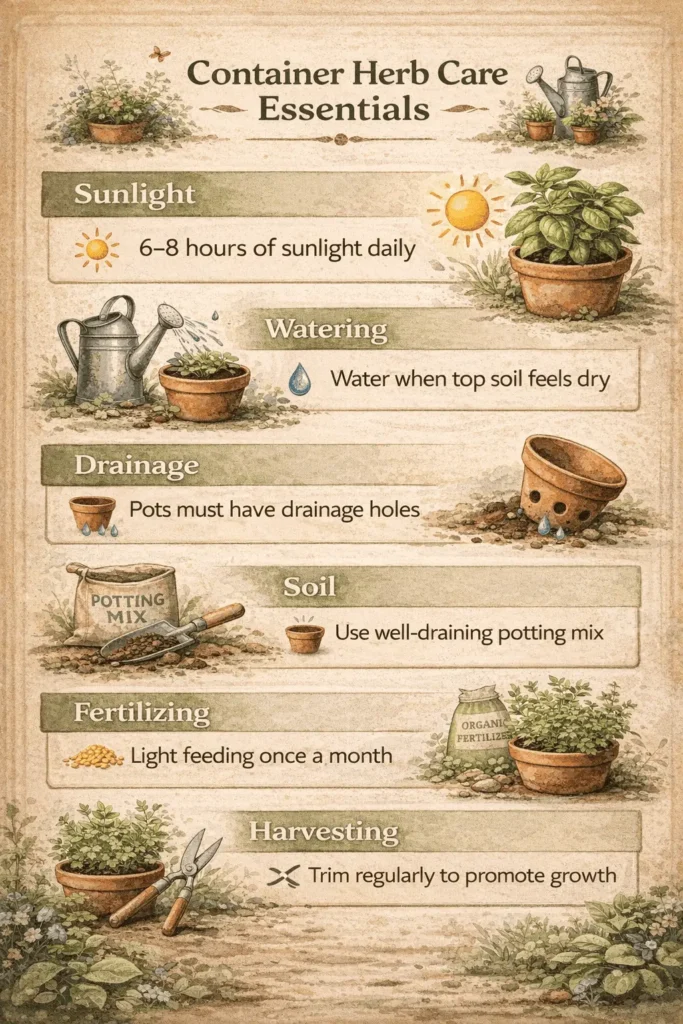
Growing herbs in containers is straightforward. Follow these steps:
Step 1: Choose Your Herbs
Select herbs that you use most often. Consider flavor preferences, cooking style, and space available.
Step 2: Pick the Right Containers
Match the pot size to the herb. Small herbs need small pots and medium herbs need larger containers.
Step 3: Prepare Your Soil
Use quality potting mix. Garden soil is too heavy for containers. A mix with peat moss, perlite, or compost helps retain moisture and nutrients.
Step 4: Planting
Gently remove herbs from nursery pots and loosen roots. Place in container and fill with soil. Press lightly to avoid air pockets.
Step 5: Water Well
After planting, water thoroughly until water drains from the bottom.
Step 6: Place in Right Location
Most herbs need lots of sun. Place containers where they receive at least six hours of sunlight daily.
Step 7: Mulch
Add a thin layer of mulch on top of soil to help retain moisture.
Light Requirements for Herbs
Understanding light is critical for success.
Full Sun
Herbs that need full sun include:
- Basil
- Rosemary
- Thyme
- Oregano
- Sage
These herbs need at least six to eight hours of direct sunlight.
Partial Sun or Shade
Some herbs can do well with less intense light. Examples:
- Mint
- Parsley
- Chives
- Lemon Balm
- Cilantro (especially in hot climates)
If you have limited sunlight, rotate containers or use grow lights.
Soil and Fertilizer Tips
Herbs prefer:
- Well-draining soil to prevent root rot.
- Organic matter to supply nutrients.
Use a balanced, slow-release fertilizer once a month. Too much fertilizer can reduce flavor, so follow package instructions.
Watering Herbs in Containers
Water consistently but do not overwater.
Tips
- Water when top 1 inch of soil feels dry.
- Early morning watering is best.
- Containers dry out faster than garden beds.
- Use saucers to catch excess water but do not let plants sit in standing water.
Common Problems and Solutions
Even experienced gardeners face issues. Here are common herb problems and how to fix them.
Leggy Growth
If herbs stretch and become weak:
- They need more sunlight.
- Move nearer to a sunny window or outside.
Yellow Leaves
This can be caused by:
- Overwatering
- Poor drainage
- Lack of nutrients
Check soil moisture and adjust.
Pests
Aphids, spider mites, and whiteflies can attack herbs.
- Spray with gentle soapy water.
- Rinse leaves occasionally.
- Remove damaged leaves.
Bolting
Herbs like cilantro bolt in heat. Provide shade in hot weather and plant successively every few weeks so you always have fresh leaves.
Harvesting Your Herb Garden
Harvesting properly encourages growth.
Tips for Harvesting
- Always harvest in the morning after dew dries.
- Do not remove more than one third of the plant at a time.
- Use clean scissors or fingers to snip stems.
Harvest regularly to keep herbs productive.
Using Your Herbs
Fresh herbs have many uses beyond cooking.
Cooking
- Basil in pesto, salads, and sauces.
- Mint in drinks, desserts, and salads.
- Rosemary with roasted meats and potatoes.
Teas
- Lemon balm and mint teas are calming and refreshing.
Drying and Storing
- Tie stems and hang upside down in a cool, dry place.
- Store dried herbs in airtight containers.
Seasonal Care
Most herbs are perennial in warm climates and annual in cold climates.
Winter Care
- Bring containers indoors if you have frost.
- Place near sunny windows.
- Reduce watering during winter.
Summer Care
- Check soil moisture daily.
- Provide afternoon shade for heat-sensitive herbs.
Conclusion
Growing the best herbs for container gardening is both rewarding and practical. You get fresh flavor, beautiful plants, and a sense of accomplishment all in one space. Whether you start with basil and mint or also add parsley, rosemary, and thyme, each herb has specific needs that you can easily meet with the right light, soil, and care.
Now that you have this complete guide, pick your favorite herbs, choose your containers, and start growing. In no time you will be harvesting fresh herbs for cooking, teas, and more.
With a little attention and care you can enjoy a thriving herb garden right at home. Happy gardening.
